You’re not entirely sure what an osteopath does. However, you understand that osteopathy is a gentle, complementary approach that views the entire body as a series of interconnected systems. Now, you have a sports injury. Should you make an appointment with a sports osteopath on the Plateau-Mont-Royal, like me, or should you see a kinesiologist?
I asked Antoine Valois-Fortier, a kinesiologist and head coach at Judo Canada, to team up with me to explain the differences between osteopathy and kinesiology.
Read this article, or check out the FAQ:
Osteopathy or kinesiology? Short answer.
Are you experiencing pain or stiffness that just won’t go away? An osteopath is a good choice. Do you need to work on restoring your range of motion while recovering from an injury? A kinesiologist is a good choice.
But in many cases, it’s best to do both: osteopathy helps you relax, and physical therapy helps you build strength.
Marie-Claude Dion, B.Sc., CAT(C), D.O.
An osteopath who has been a member of Ostéopathie Québec since 2017 and a certified athletic therapist since 2004.
I use my hands to feel, locate, and release blockages in your body—in your muscles, internal tissues, joints, and even your internal organs.
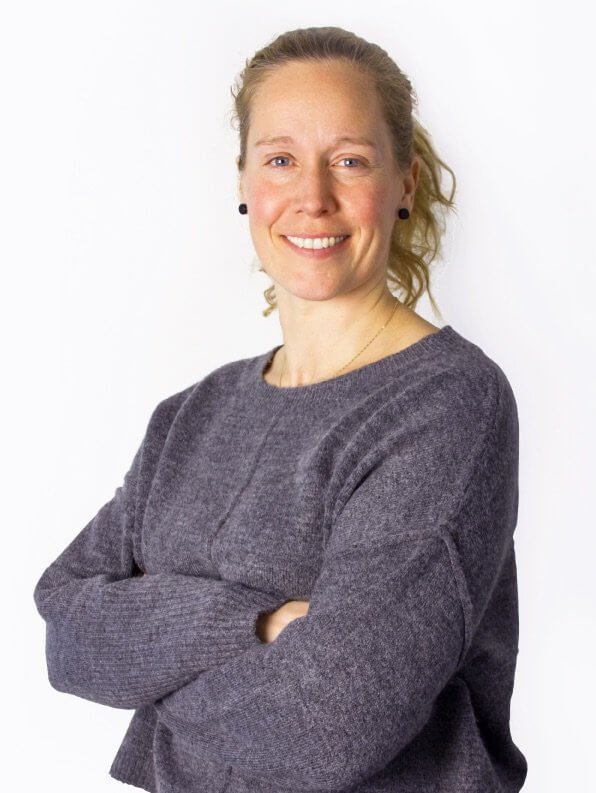
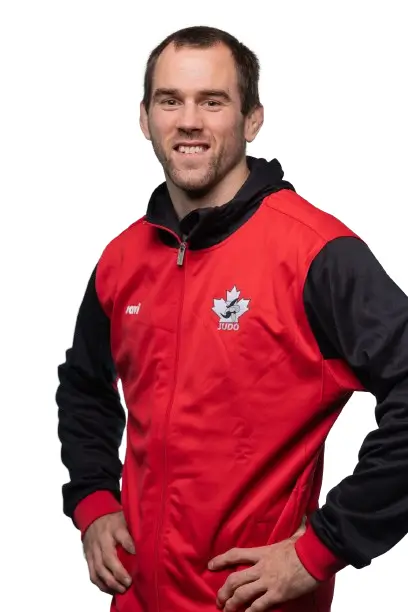
Antoine Valois-Fortier
Kinesiologist and Head Coach of Judo Canada
Kinesiologists use movement and therapeutic exercise as tools for assessment and rehabilitation.
In short, the two approaches (osteopathy and kinesiology) are complementary. As a client, your best choice depends on your problem, how far along you are in resolving it, and your goal.
Quick Comparison
|
Osteopath |
Kinesiologist |
Athletic therapist | |
|
Main Approach |
Manual techniques: palpation, tissue and joint mobilization |
Movement, therapeutic exercise, activity prescription |
Manuals, exercises, field operations |
|
Training |
5 to 6 years full-time | ||
|
Professional Guidance | |||
|
When to See a Doctor First |
Pain, restrictions, and non-traumatic systemic imbalances |
Rehabilitation, Prevention, Performance, Exercise-Based Rehabilitation |
Acute Sports Injury, On-Field Emergency, Return to Play |
|
Insurance Receipts |
Yes (most private insurers) |
Yes (including CNESST, SAAQ, and IVAC) |
Yes (most) |
I completed my training at the Collège d’études ostéopathiques de Montréal, which no longer exists. Training is now offered through UQAM’s public microprogram for osteopaths, as well as through private programs. Osteopathy is in the process of gaining professional recognition.
– Marie-Claude Dion
Who Does What? The Differences Between Osteopaths and Kinesiologists.
Simply put, an osteopath understands how your body works, while a kinesiologist understands how your body moves.
Osteopaths
An osteopath works exclusively with his or her hands. He or she palpates (or “manipulates,” as it’s commonly called) your tissues. This might involve the mobility of a joint like the ankle, the flexibility of a fascia like the iliotibial band, the movement of the internal organs protected by the abdominal wall, or the rhythm of the skull as part of the “flow” while running.
In short, osteopaths identify what isn’t functioning as expected within your body’s chains and systems. Their treatment is designed to help you regain your mobility so that your body can function properly.
(Kind of like tuning up your bike in the spring.)
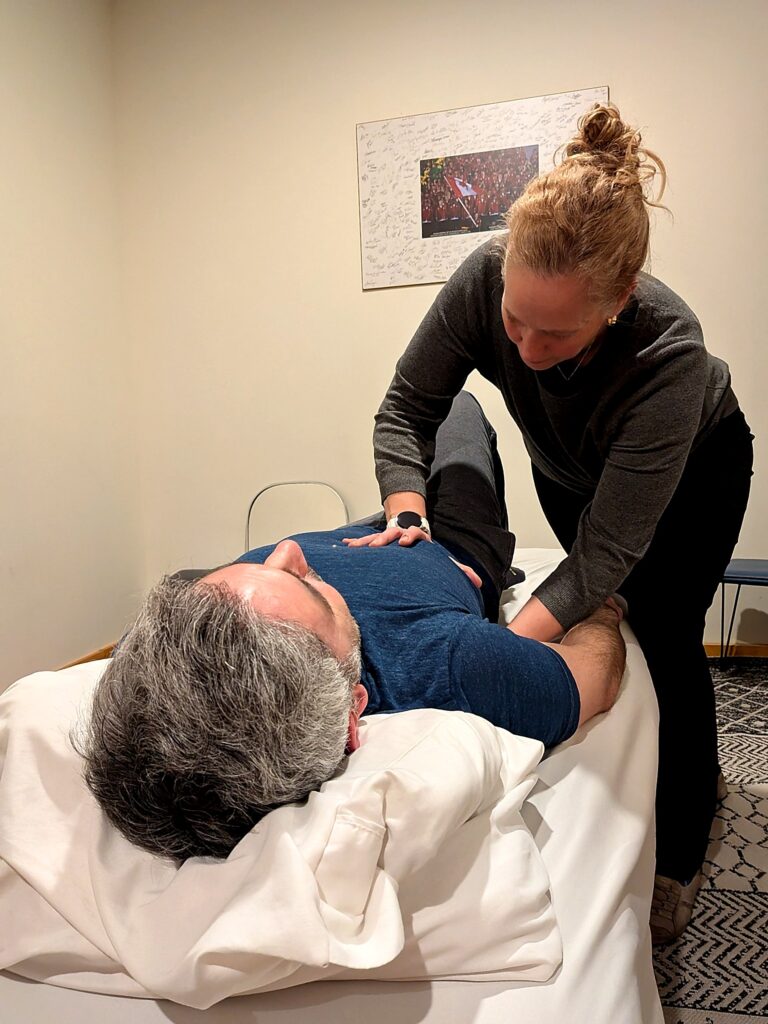
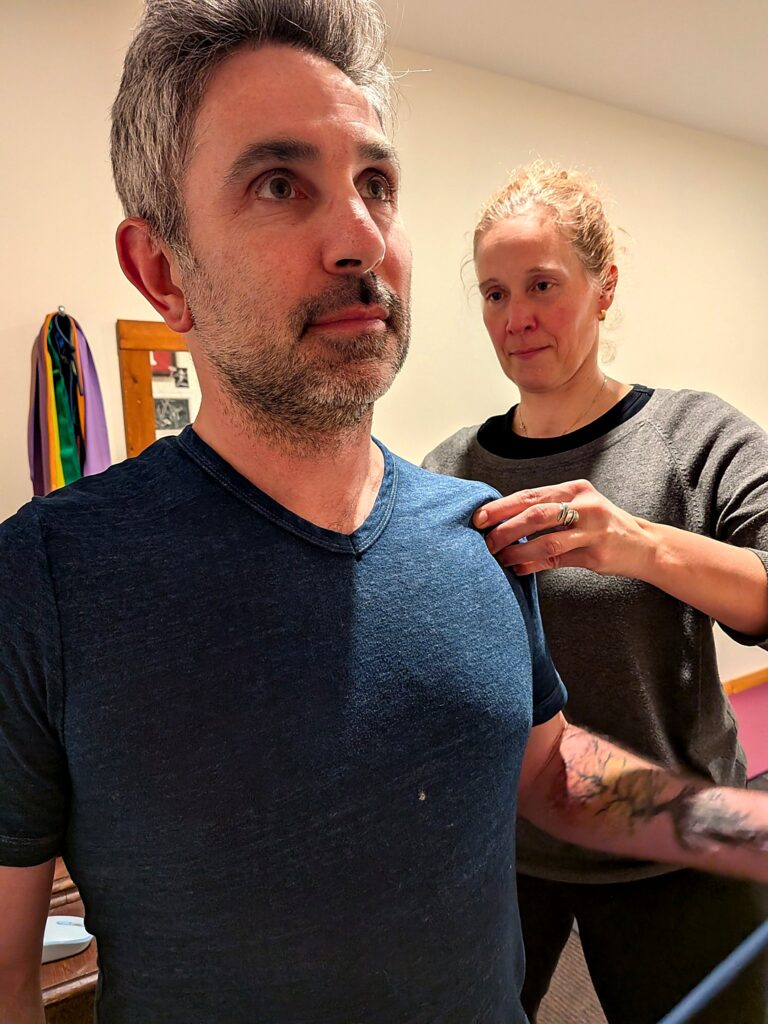
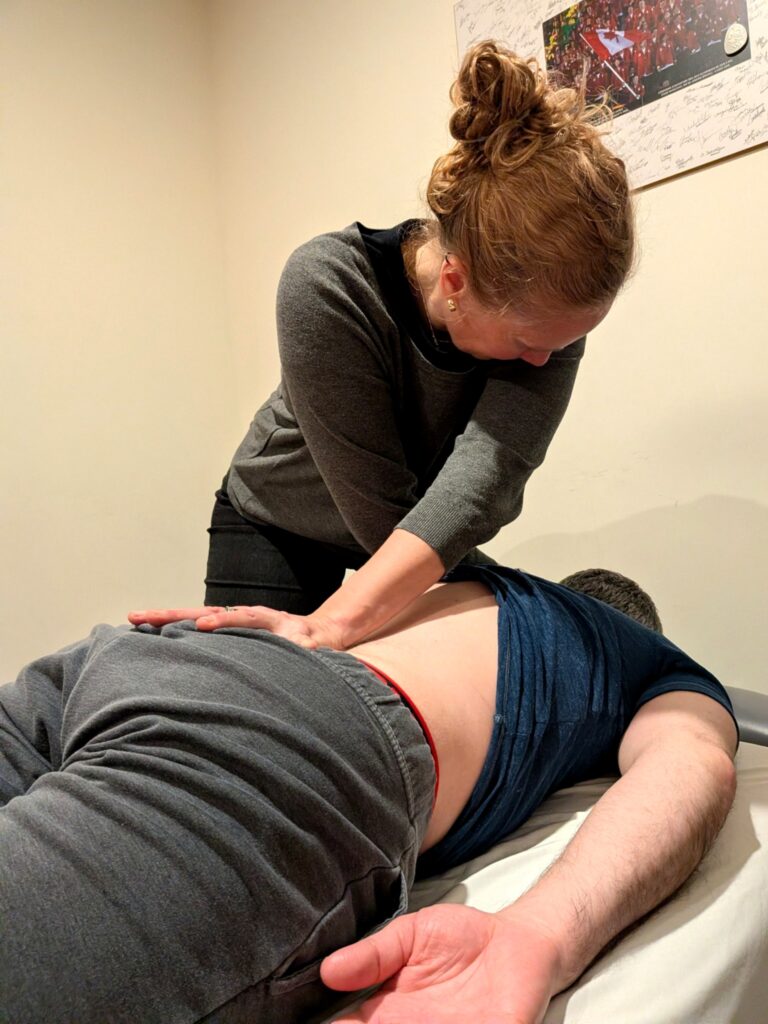
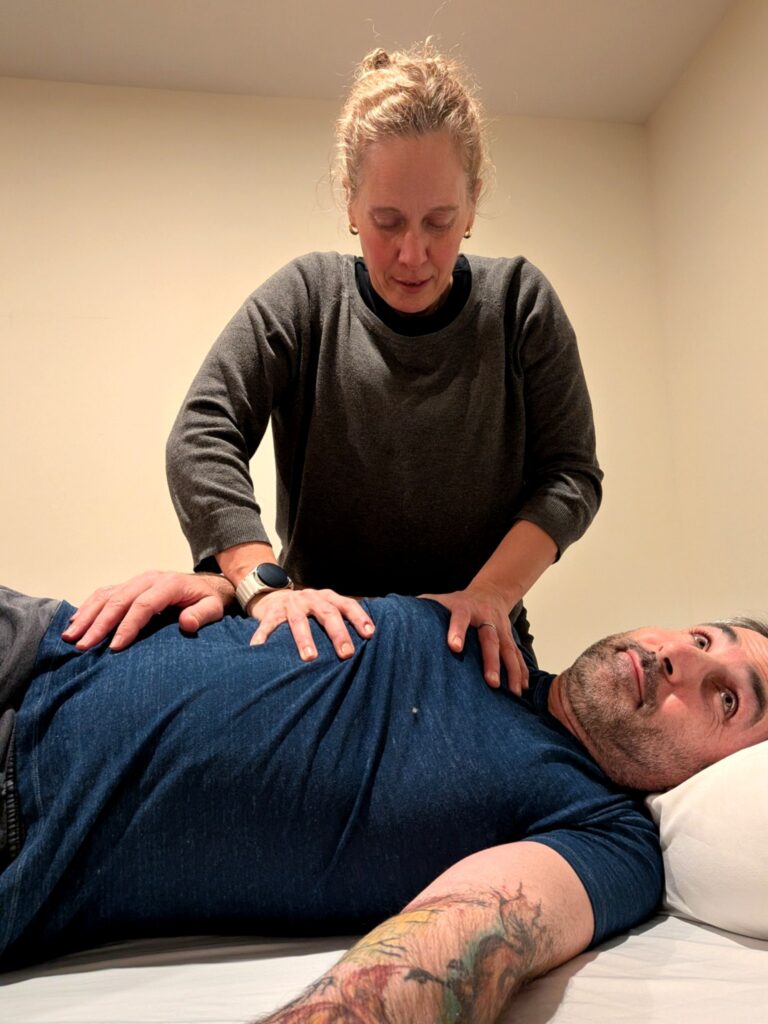
The osteopathic approach is holistic. In other words, your osteopath will identify a lack of mobility and assess whether this weakness has an impact on the rest of your body. That’s their specialty: understanding that an ankle that doesn’t move properly creates tension throughout the entire posterior muscle chain and causes iliotibial band syndrome when you run.
I like osteopathy because it helps relieve chronic or recurring pain, digestive and ENT issues, etc., as well as residual pain from trauma.
– Marie-Claude Dion
Kinesiologists
Antoine is a specialist in human movement. His greatest strength lies in objectively assessing physical condition and prescribing targeted exercises to rehabilitate, strengthen, prevent injuries, or improve your performance.
While Marie-Claude (me) works with my hands, a kinesiologist gets you moving. He has you move, measures your ability to perform various movements, identifies muscular imbalances, and designs a progressive program that you’ll follow on your own or with him.
This is the right person to see for:
- rehabilitate a knee after an injury, with or following physical therapy;
- correcting one’s professional posture through exercise;
- to train for a sporting event or get back in shape after a long break;
- and help manage a chronic condition such as diabetes.
What about athletic therapists?
If Antoine and I have managed to clearly explain the difference between osteopathy and kinesiology, you might now be wondering what an athletic therapist does.
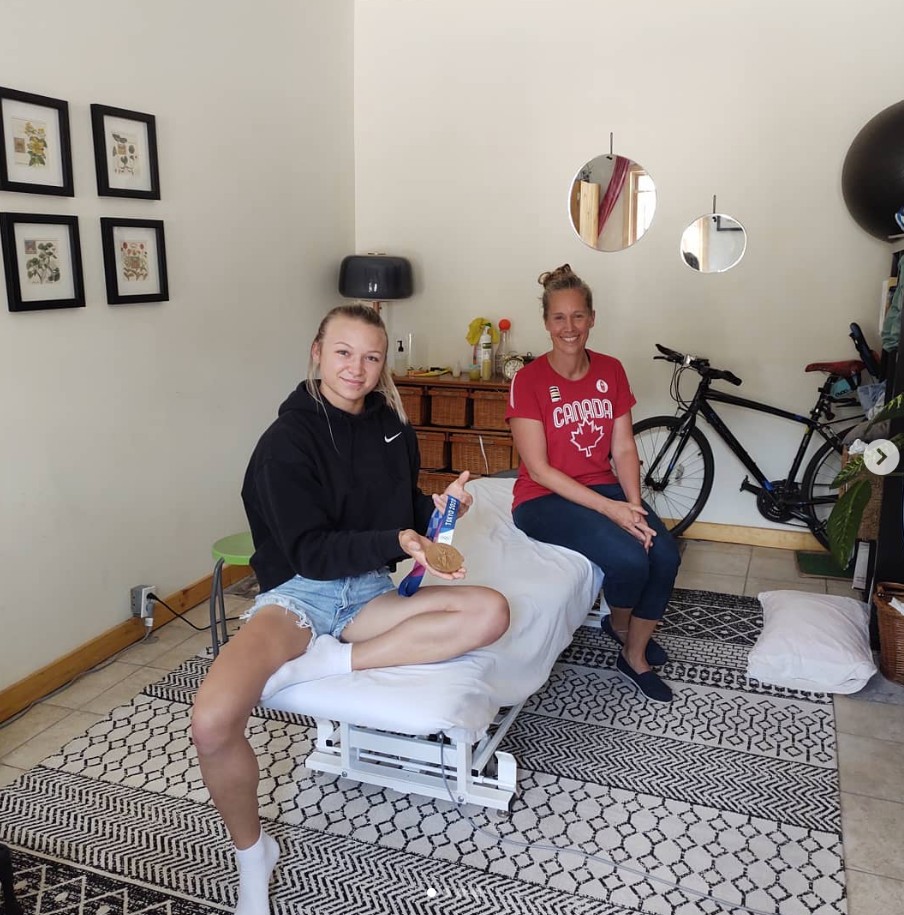
Athletic therapy is a distinct profession, different from kinesiology and osteopathy. I’m speaking about this without consulting a colleague because I’m a certified CAT(C) athletic therapist. In fact, Antoine knows me from my time as the head athletic therapist for Judo Canada.
Sports therapy, as some call it, focuses on the prevention, assessment, treatment, and rehabilitation of musculoskeletal injuries related to physical activity. I’m in intervention mode, out on the field. So, the sports therapist handles sports emergencies, first aid, concussion management, and immediate return to play.
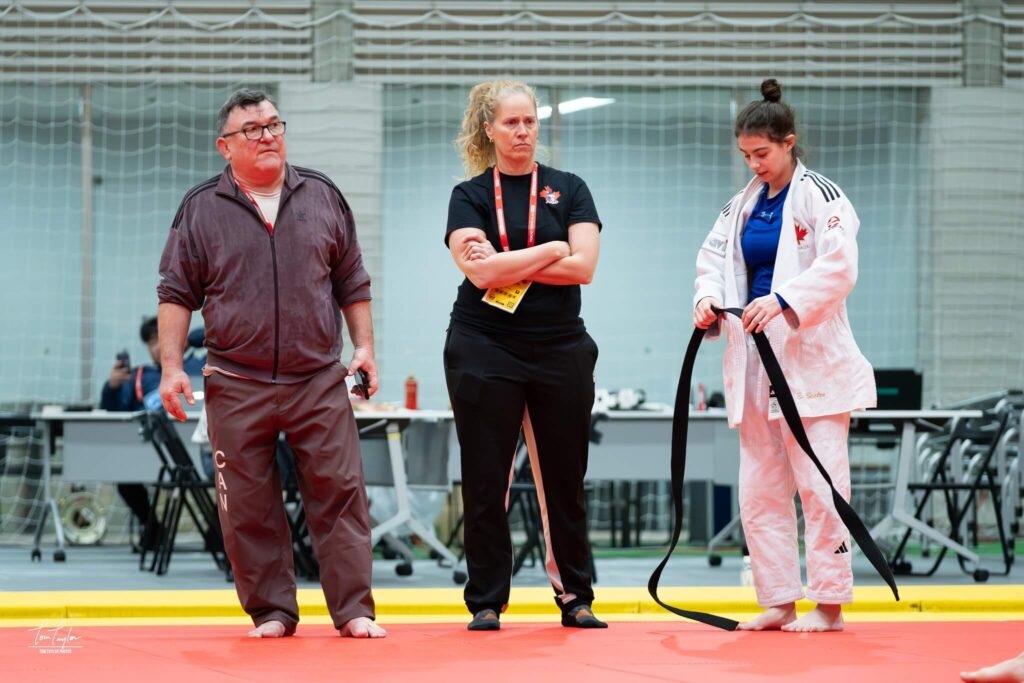
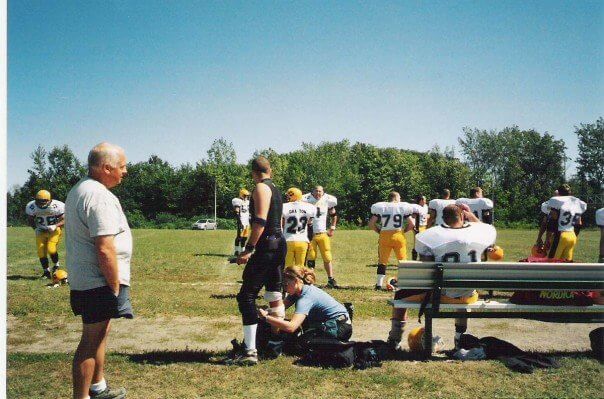
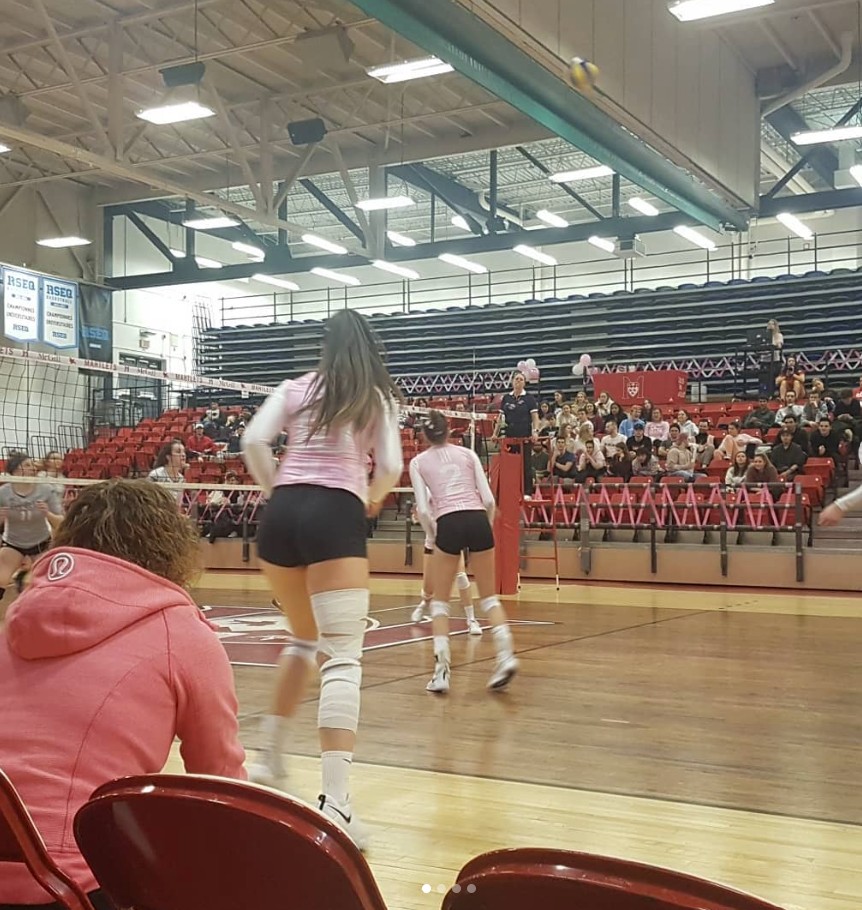
I can assess a sports injury, treat it manually, and help you prepare to return to your activity without having to refer you to another professional.
But sometimes, I team up with professionals in other fields, such as kinesiologists.
– Marie-Claude Dion
Real-life examples:
When should you see an osteopath or a physical therapist?
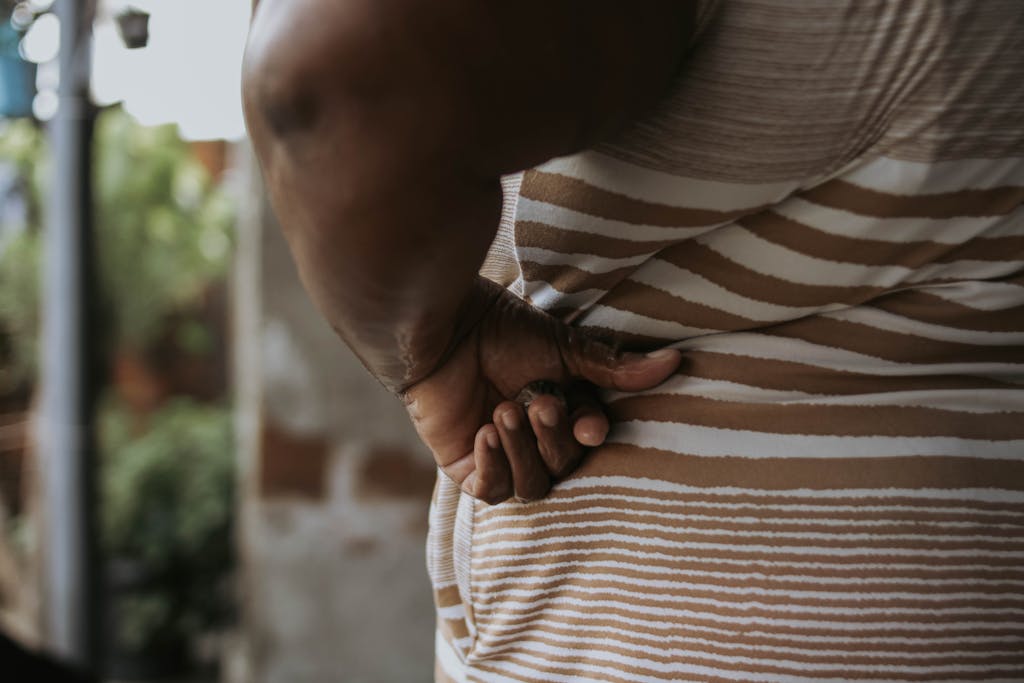
You have back pain. It’s been going on for months. You don’t know why.
1) Make an appointment with an osteopath to identify restrictions and restore mobility.
2) Work with a kinesiologist to correct your posture and improve motor control.
Making an appointment with both specialists can help you avoid a relapse.
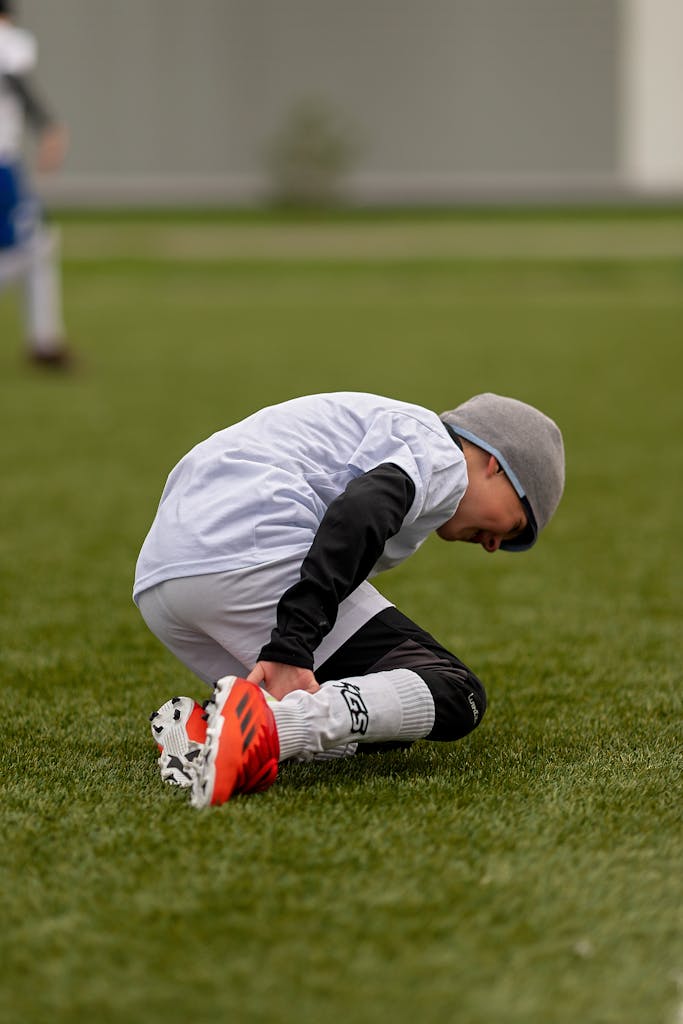
Your son sprained his ankle while playing soccer.
1) Make an appointment with an athletic therapist as soon as possible to assess the severity of the injury, immobilize the area if necessary, and begin the recovery protocol.
2) Continue with osteopathic treatment to address any remaining restrictions in the chain (ankle, knee, hip).
3) Consult a kinesiologist to undergo comprehensive rehabilitation and prepare for your return to play.
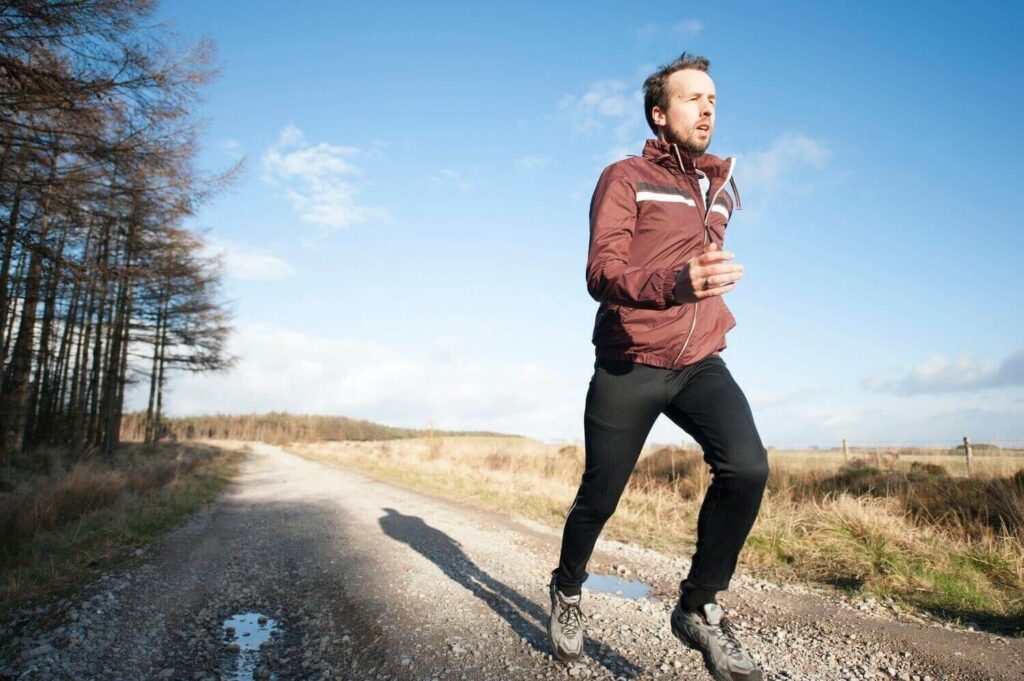
You’re training for a marathon.
1) Make an appointment with a kinesiologist to assess your fitness level and develop your training program.
2) See an osteopath to maintain your overall mobility and prevent compensatory movements.
3) Consult an athletic therapist if you have a history of injuries or during periods of high intensity.
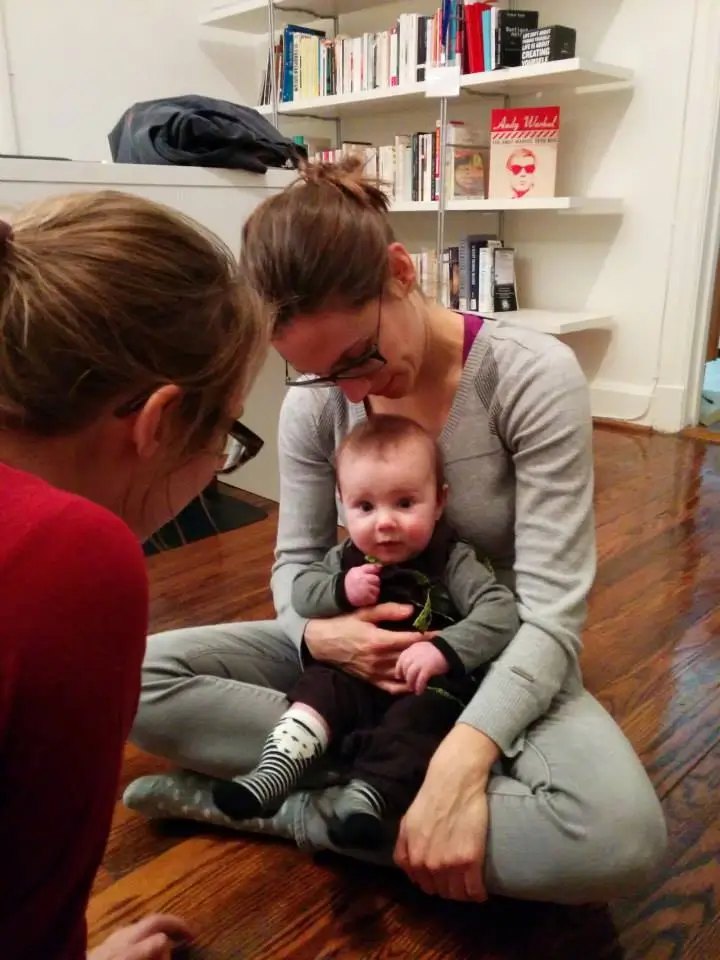
Postpartum, e.g., diastasis.
1) Make an appointment with an osteopath to release tension that has built up during pregnancy and childbirth, and to realign your pelvis.
2) Consult a kinesiologist to undergo a gradual reconditioning program (often in conjunction with physical therapy for perineal rehabilitation).
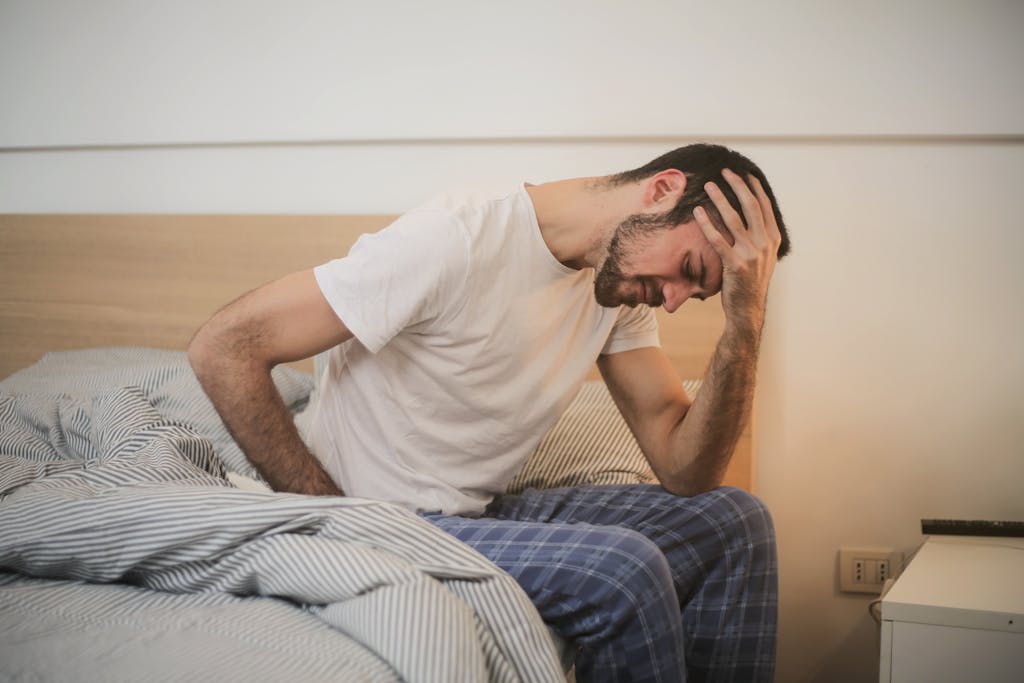
Headaches, digestive problems.
1) Schedule an appointment for an osteopathic emergency, focusing on tissue and visceral approaches.
A kinesiologist is not usually the first choice. Unless the underlying cause is related to posture.
You work sitting down eight hours a day, and you can feel it all over.
1) Make an appointment with a kinesiologist to assess your posture and develop a corrective exercise program tailored to your daily routine.
2) See an osteopath to loosen up areas that have become stiff from a sedentary lifestyle. Especially if you’re experiencing pain.

Why do the two approaches complement each other?
Osteopathy relieves. Kinesiology strengthens.
A joint that has been freed but has never relearned how to move properly will eventually become stuck again. A strengthened muscle surrounding a restricted joint will compensate. That is why, in many situations, it is not a question of “osteopathy or physical therapy?”, but rather a complementary approach.
I treat movement restrictions using osteopathy. I assess and treat sports injuries through athletic therapy. And I work in collaboration with trusted kinesiologists to whom I refer patients. Because that’s their area of expertise, and our skills complement each other.
– Marie-Claude Dion
FAQ: Answers to Frequently Asked Questions
Do you need a doctor’s referral to see an osteopath or a kinesiologist?
No, you can make an appointment without seeing a doctor first. However, some insurers require a doctor’s referral in order to reimburse you. Check with your insurance company.
Do insurance companies cover osteopaths and kinesiologists?
Most private insurance plans cover osteopathy and kinesiology sessions, provided that the practitioner is a member of a recognized professional association. Marie-Claude issues receipts that are accepted by major insurers.
How long does it take to see results from osteopathy and kinesiology?
In osteopathy, most conditions are resolved or show significant improvement within 3 to 5 sessions spaced out over time. In kinesiology, treatment typically takes longer because the goal is to bring about lasting change in your habits.
Can you see an osteopath and a physical therapist at the same time?
Yes, and it’s often recommended.
Who should I see (an osteopath or a physical therapist) for a sports injury?
If your injury is recent or acute, you should see an athletic therapist (that would be me, Marie-Claude). Next, to work on your mobility and prevent compensatory movements, see an osteopath. For the exercise-based rehabilitation and return-to-performance phase, see a kinesiologist.
Where can I see an osteopath or a kinesiologist in the Plateau-Mont-Royal area?
My clinic is located at 916 Duluth Avenue East, right in the heart of the Plateau-Mont-Royal neighborhood. I work with trusted kinesiologists in the neighborhood. I’d also be happy to refer you to them.
And what about physical therapy in all of this?
Physical therapy is yet another profession, regulated by a professional association in Quebec. Read my article, co-written with Jimena Castaneda of the Physio Théra Plus clinic: Osteopathy vs. Physical Therapy.
Still on the fence?
If you’re not sure whether to choose osteopathy or athletic therapy, that’s okay. Make an appointment with me at my clinic in Plateau-Mont-Royal or send me an email. I’ll refer you to the right professional—which might even be your doctor.
Clinic on the Plateau-Mont-Royal, 916 Duluth Avenue East, Montreal
Marie-Claude Dion is an osteopath (D.O.) who graduated from the Collège d’études ostéopathiques de Montréal and is a CAT(C)-certified athletic therapist. She served as Judo Canada’s head therapist at the 2016 Rio Olympic Games and has been working with athletes, families, and active individuals in the Plateau-Mont-Royal area for over 20 years.